
When ChatGPT and Gemini began changing how people discover brands, the first question every company asked was obvious: Do we show up?
So the industry did what it knows how to do. We ran prompts across AI models, counted mentions, compared competitors, built dashboards, and started optimizing.
All of that matters. We do it too. It remains at the core of Chatoptic, which includes the full monitoring layer teams expect from an AI visibility platform.
But we believe the industry started one step too late…
AI visibility starts with the person, not the answer.
Most AI visibility campaigns begin with a list of prompts. Very few begin by asking who is behind those prompts, what they are trying to solve, what they fear getting wrong, and what would make them trust one brand over another.
That gap matters because ChatGPT and Gemini are not simply search boxes with longer answers. People use them as assistants and an assistant is there to help someone, and its recommendations are shaped by the context it has about that person.
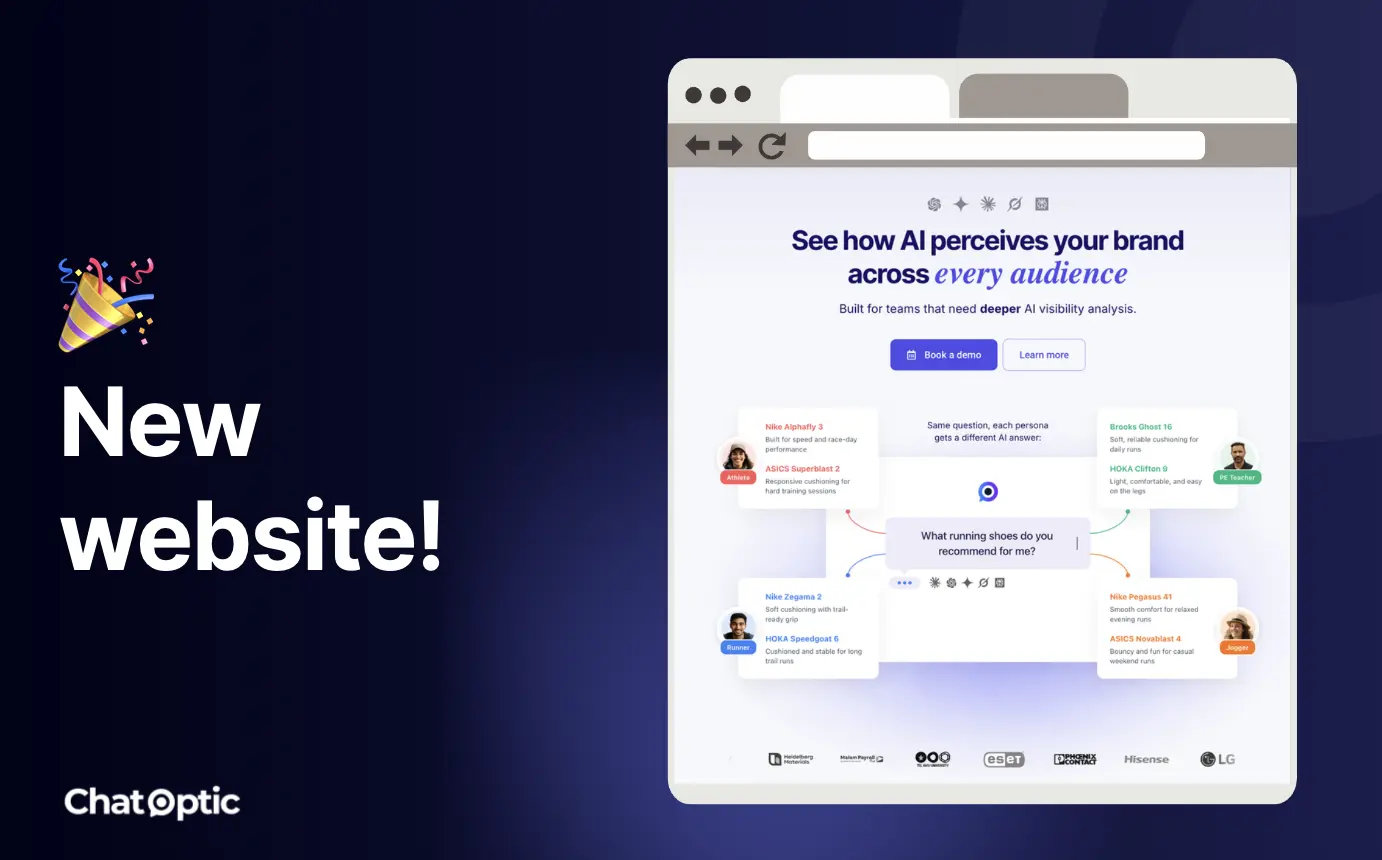
A procurement leader, a technical user, and a first-time buyer can ask the same question and receive different comparisons, built from different sources, that lead to different brand recommendations. The words in the prompt may be identical, the person is not.
That insight became the foundation of Chatoptic and the belief that there is no such thing as AI visibility in the abstract, there is only AI visibility for someone.
We called the layer connecting what AI says with the person receiving the answer “LLM Persona Intelligence”.
Over the past year, that idea moved from a product belief into real enterprise work.
Marketing teams at enterprise brands including Tel Aviv University, IAI (Israel Aerospace Industries), Phoenix Contact, i24 News and many others joined us in putting it to the test across real questions and audiences. They helped us see where the idea held up, where it could go deeper, and how persona-based visibility could fit into the way large organizations actually work.
That foundation proved the value of the audience lens and helped Chatoptic grow faster than we expected.
The next layer comes before the prompt list
As that work expanded, the next opportunity became clear.
Seeing AI visibility through a persona’s eyes proved how much audience context can add to monitoring. It also opened a larger question: how can teams understand those audiences before choosing which prompts to track?
Once we could show that a procurement leader and a technical user received different answers, the natural next step was to understand why each person asks what they ask, what matters to them, how their decision develops, and which questions appear along the way.
The audience lens had changed the measurement, now it could also change where the process begins.
Marketing was always about the market. Yet somewhere in the race to measure AI, we began with the machine instead of the people.
Teams often choose prompts from keyword lists, clickstream panels, online forums, and internal brainstorming. These sources can reveal real questions and real behavior, but usually without the context of the person behind each query.
You may know that someone searched for X and received recommendation Y, but not whether that person was a procurement leader, a technical user, a first-time buyer, or someone else entirely.
The result is a blended view of the market. The monitoring may be perfectly accurate, yet still hide the differences that matter most. Your brand may lead with one audience and disappear for another.
Our view is simple: audience research should be the first layer of AI visibility, helping teams understand the people behind the prompts and what moves them before deciding which questions deserve to be tracked.
A deeper AI visibility workflow
Our new website and features, demonstrates how Chatoptic brings these layers together in a simple flow: research the people behind the prompts, track what each audience sees, and optimize everything that shapes your AI visibility based on what you learn.
Research
Chatoptic lets teams explore the people behind the prompts before they commit to a monitoring plan.
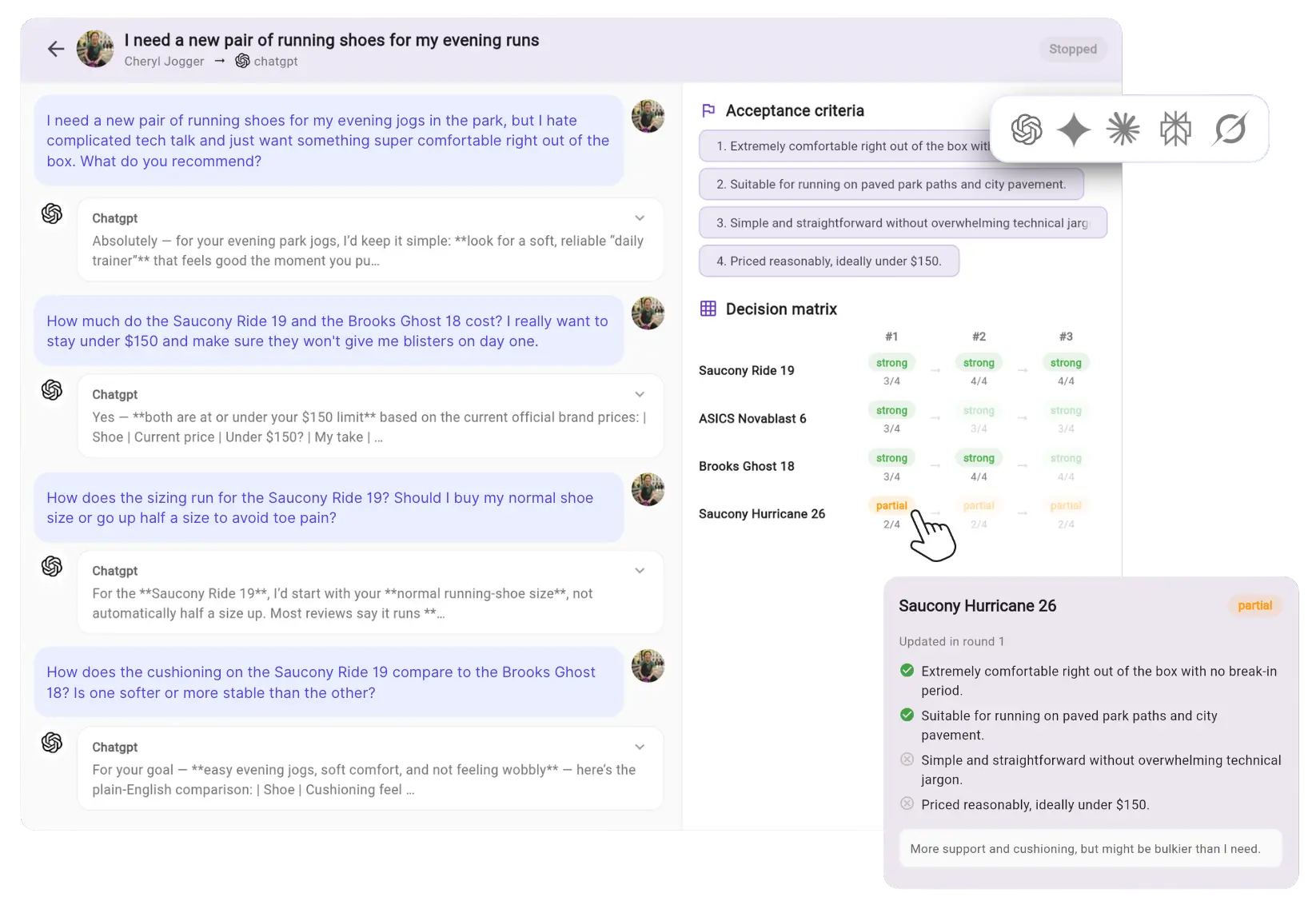
- AI Persona Chat lets marketers interview a simulated buyer persona built around a defined audience.
- AI Focus Group brings several personas into the same structured discussion to reveal shared needs, disagreements, doubts, and decision triggers.
- Buyer Simulation follows a persona through a multi-turn AI conversation and shows when a brand enters the consideration set, moves up, or drops out.
These tools do not replace interviews, surveys, first-party data, or good marketing judgment. They give teams a fast way to test assumptions, sharpen research questions, and find patterns worth validating.
Track
Once you know whose experience matters, Chatoptic gives you the monitoring layer you already expect, enriched with the audience context it has been missing.
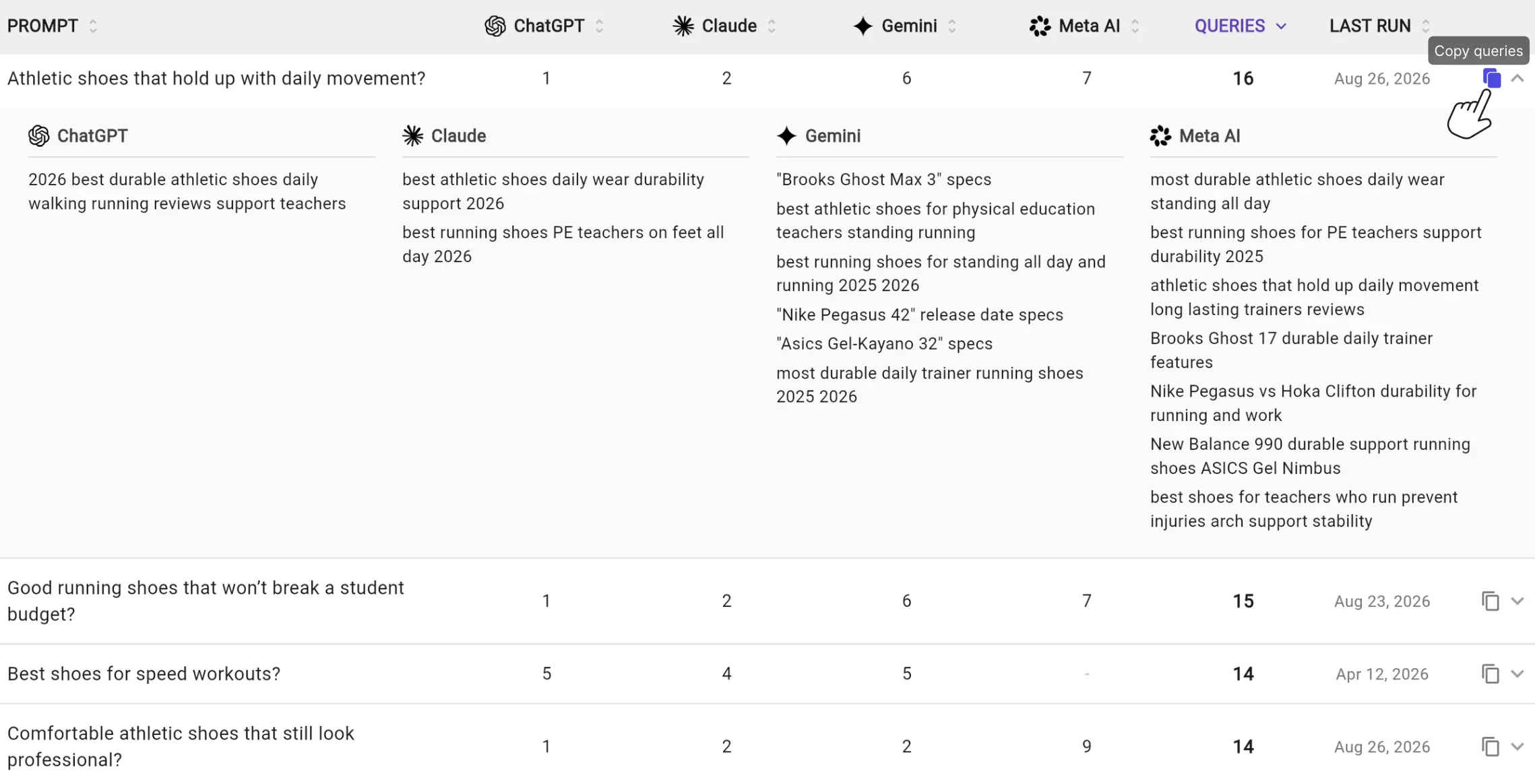
You can track prompts across leading AI models, compare competitors, analyze AI answers, measure sentiment, see how query fan-out and citations change between personas, and trace each cited source to the paragraph it helped shape.
The result is a more accurate view of the answers, research paths, and sources each audience actually sees.
You can still monitor standard prompts exactly as you do today. You can also run the same prompt through different personas and see where the answers split. That is often where the most useful finding lives.
Optimize
Data becomes useful when a team can work with it.
Our new AI Visibility Agent is connected to your Chatoptic account, so you can ask why visibility changed, which personas see your brand differently, where competitors are winning, and what to do next. It can move from a top-level result to the prompts, answers, sources, and audience context behind it.
We also rethought reporting.
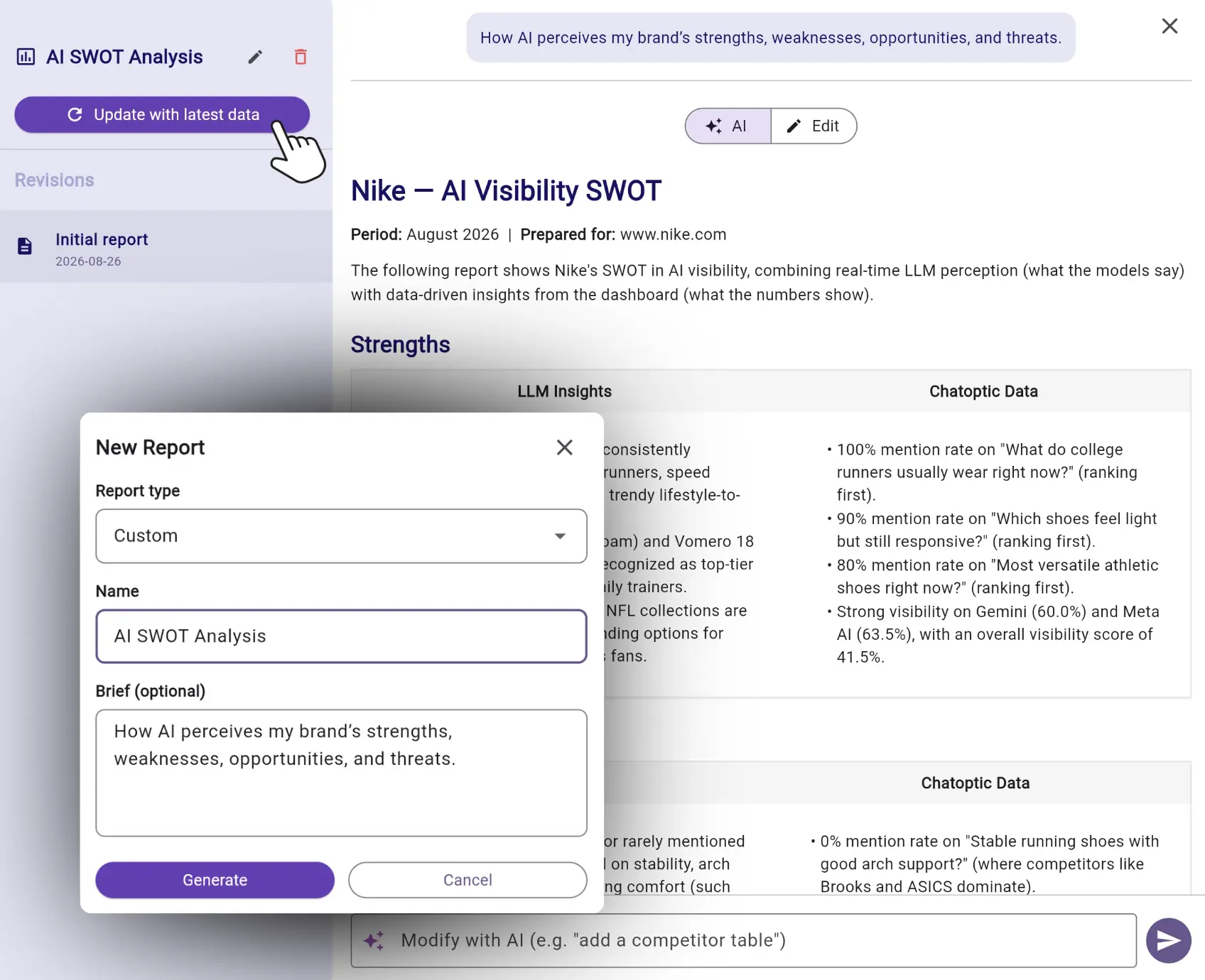
With Living Reports, you can define exactly what a report should show and how it should be structured in a single prompt, refine it through chat, and refresh it with the latest data in one click.
Our Persona Writer turns what you learn into SEO and GEO-friendly content built around the fan-out queries relevant to the audience you want to reach.
Prefer to work with Chatoptic from Claude? Connect through our new MCP to bring your Chatoptic data and capabilities into the AI tools and automated workflows your team already uses.
The questions a CMO actually needs answered
A single visibility score can be useful, but it cannot answer the questions that shape a real marketing plan:
- Which audiences see our brand, and which important audiences do not?
- Why does AI recommend us to one buyer but favor a competitor for another?
- At what point in the conversation do we enter or leave the consideration set?
- Which claims and sources shape the way AI presents us to specific audiences?
- What should we research, monitor, or improve next?
Those questions require more than a bigger dashboard. They require a view of the customer, the answer, and the path between them.
Read more about AI visibility KPIs for CMOs.
The category we want to build
After 20 years of building in search and marketing, I have learned that the biggest shifts rarely make the old discipline disappear overnight. They add a layer that changes how the whole job is done.
We believe AI visibility is making that shift now. It is moving from rank tracking for chatbots toward a deeper form of audience intelligence, one that helps brands understand how AI perceives, presents, and recommends them to different people.
Today, many customer journeys begin on ChatGPT, Gemini, Claude, and other AI platforms. Tomorrow, they may begin somewhere else. The channel will change, the market will not.
Brands will still need to understand the people they want to reach, see themselves through those people’s eyes, and act on what they learn.
If you want standard AI visibility monitoring, you will find it inside. If you also want to know whether you are tracking the right questions, for the right audiences, and why AI treats those audiences differently, that is where Chatoptic goes deeper.