
One prompt can trigger dozens of AI searches. But until now, understanding how those searches connect meant going through long lists of individual queries.
Today, we’re making that process visual.
We’ve upgraded Chatoptic’s Query Fan-Out tool with an interactive topic map that groups related AI searches, highlights the five largest topic clusters, and connects them to your brand’s visibility in AI-generated answers.
Instead of just seeing what AI searched for, you can now see where its research is concentrated, which topics matter most, and where your competitors are getting mentioned instead of you.
Why Query Fan-Out Matters for GEO
When someone asks ChatGPT, Gemini, or another AI assistant a question, the model may break that request into several related searches before generating an answer.
This process is known as query fan-out.
Google officially describes this process as generating related queries to retrieve additional information needed to answer a user’s question.
For example, someone asking an AI assistant to recommend a skincare brand might trigger searches about ingredients, product reviews, prices, alternatives, and suitability for different skin types.
For brands investing in Generative Engine Optimization (GEO), those additional searches reveal topics and questions worth understanding.
They can help explain why certain competitors appear in AI-generated answers, which information AI assistants look for, and where your content may be missing useful details.
There’s another important factor: different audiences and AI models can take different research paths.
Chatoptic monitors prompts using persona context, allowing you to examine the searches generated for different types of customers, rather than relying on one generic prompt.
And with the latest update, you can understand those research paths at a glance.
What’s New: From Query Lists to Visual Topic Clusters
Previously, Chatoptic displayed captured fan-out queries in a detailed list, organized by monitored prompts and AI models.
That functionality is still available. Now we’ve added a visual layer to help you identify patterns across the searches.
1. Discover the Five Largest Query Fan-Out Topics
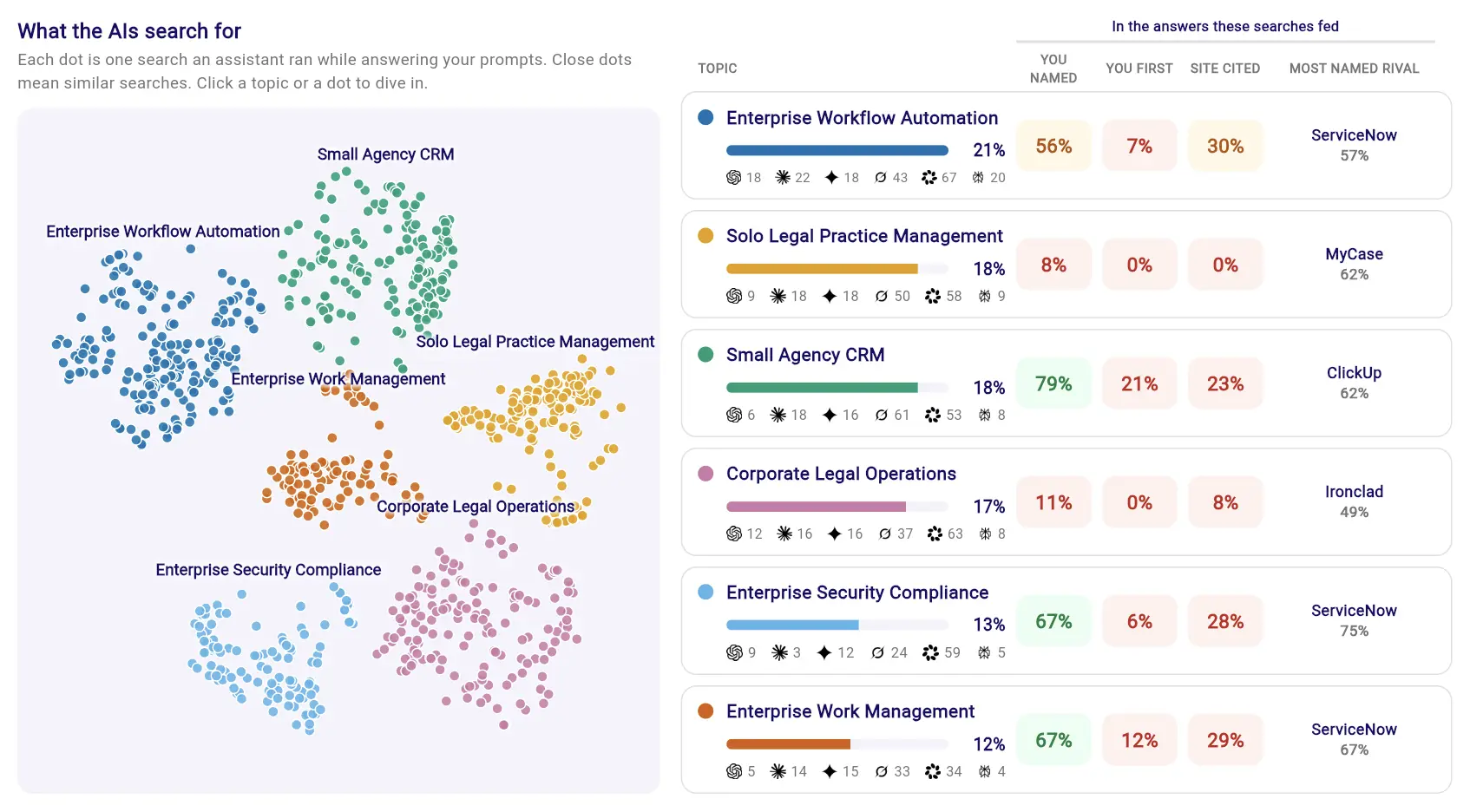
The new interactive map automatically groups related subqueries into topic clusters.
Each dot represents an individual search captured while an AI assistant was answering one of your monitored prompts. Searches with similar meanings appear closer together, while different colors distinguish the topics.
Chatoptic highlights the five largest clusters based on the number of captured searches.
This makes it easier to identify which subjects AI assistants research most frequently across your monitored prompts, without reviewing every query individually.
2. Explore the Actual Searches Behind Each Topic
The visualization isn’t just a static chart.
Hover over any dot to reveal the actual search query and the AI model that generated it.
You can also interact with the topic list to focus on a specific cluster and examine the searches associated with it.
For example, a retailer monitoring AI recommendations might discover separate clusters around affordable products, premium alternatives, price comparisons, and category-specific recommendations.
Instead of treating hundreds of searches as unrelated keywords, you can start understanding the broader research topics connecting them.
3. Connect AI Search Topics to Brand Visibility
This is where the new visualization becomes particularly useful for GEO.
Alongside the topic map, Chatoptic displays a breakdown of the five largest clusters, including their share of the displayed searches and the number generated by each AI model.
For each topic, you can also examine how your brand and competitors appeared in the AI answers associated with those searches:
- You Named: How often your brand appeared in the answers.
- You First: How often your brand was mentioned first.
- Site Cited: How often your website was cited.
- Most Named Rival: Which competitor appeared most frequently and its mention rate.
This connects two important parts of AI visibility analysis: what AI assistants search for and which brands they ultimately present to users.
A topic may account for a large share of captured AI searches, yet your brand might rarely appear in the associated answers.
Meanwhile, a competitor could be consistently recommended within the same topic.
That’s a useful signal for deciding where to investigate content gaps, competitor coverage, and other GEO opportunities.
Turning Query Fan-Out Insights Into GEO Actions
Let’s say your brand sells beauty products.
Your Query Fan-Out map reveals that AI assistants frequently research affordable fragrances, niche perfumes, and product price comparisons.
After examining the clusters, you notice that your brand appears regularly in general product recommendations but is rarely mentioned in answers related to price comparisons.
You now have a more specific question to investigate: Does your website provide enough useful pricing and comparison information, and which competing sources are being used in those answers?
From here, you can:
- Prioritize topics: Focus on clusters that represent a meaningful share of AI searches but show limited brand visibility.
- Investigate individual queries: Identify recurring questions, comparisons, and buying criteria that your current content may not address.
- Analyze competitors: Examine which brands dominate the related answers and review the sources supporting their visibility.
- Improve relevant content: Update existing pages or create useful resources that address the audience’s needs, rather than publishing a separate page for every query.
- Monitor changes: Continue tracking the same prompts and personas to see how your brand’s mentions and citations change over time.
And when you discover a promising content opportunity, you can use Chatoptic Persona Writer to turn selected fan-out queries into content drafts while keeping the original audience context connected to the writing process.
Query Fan-Out adds another layer of information about the searches AI assistants perform and the questions they explore when preparing recommendations.
A Clearer Picture of What Happens Before the AI Answer
AI visibility isn’t only about whether your brand appears in an answer. Understanding the searches leading up to that answer can reveal opportunities that traditional visibility reports don’t show.
With the new Query Fan-Out visualization, you can move from individual subqueries to a broader view of the topics AI assistants explore, the competitors appearing in those areas, and the gaps worth investigating.
The new interactive topic map is now available in Chatoptic. Explore Chatoptic Query Fan-Out and discover what AI assistants search for before they answer.