








Trace the pages cited across tracked prompts, then see which sources support your brand, your competitors, and each paragraph of the answer.


LLM Citation Analysis shows which sources AI models rely on when answering your tracked prompts.
Chatoptic maps every cited domain and URL, classifies it by source type, and connects it to the prompts, brands, and AI models where it appeared. The report separates sources related to your brand, your competitors, and the wider information used to build the answer.
You can also see which pages from your website or a competitor’s website are cited most often, then open individual results to understand exactly where each source contributed to the answer.
Most citation reports treat AI sources as if every user receives the same answer supported by the same set of pages.
But AI models use the context behind a prompt when deciding what information to include and which sources to rely on. Two personas asking the same question may receive different recommendations, claims, and citations.
A technical buyer may be shown industry publications, while a first-time buyer may receive sources from reviews, guides, or social platforms. Looking at citations without persona context can therefore hide the sources that actually shape each audience’s answer.
Chatoptic adds Persona Intelligence to citation analysis, helping you see which sources AI models use for different audiences, prompts, topics, and models. This gives you a closer view of the citation landscape your real customers may experience.
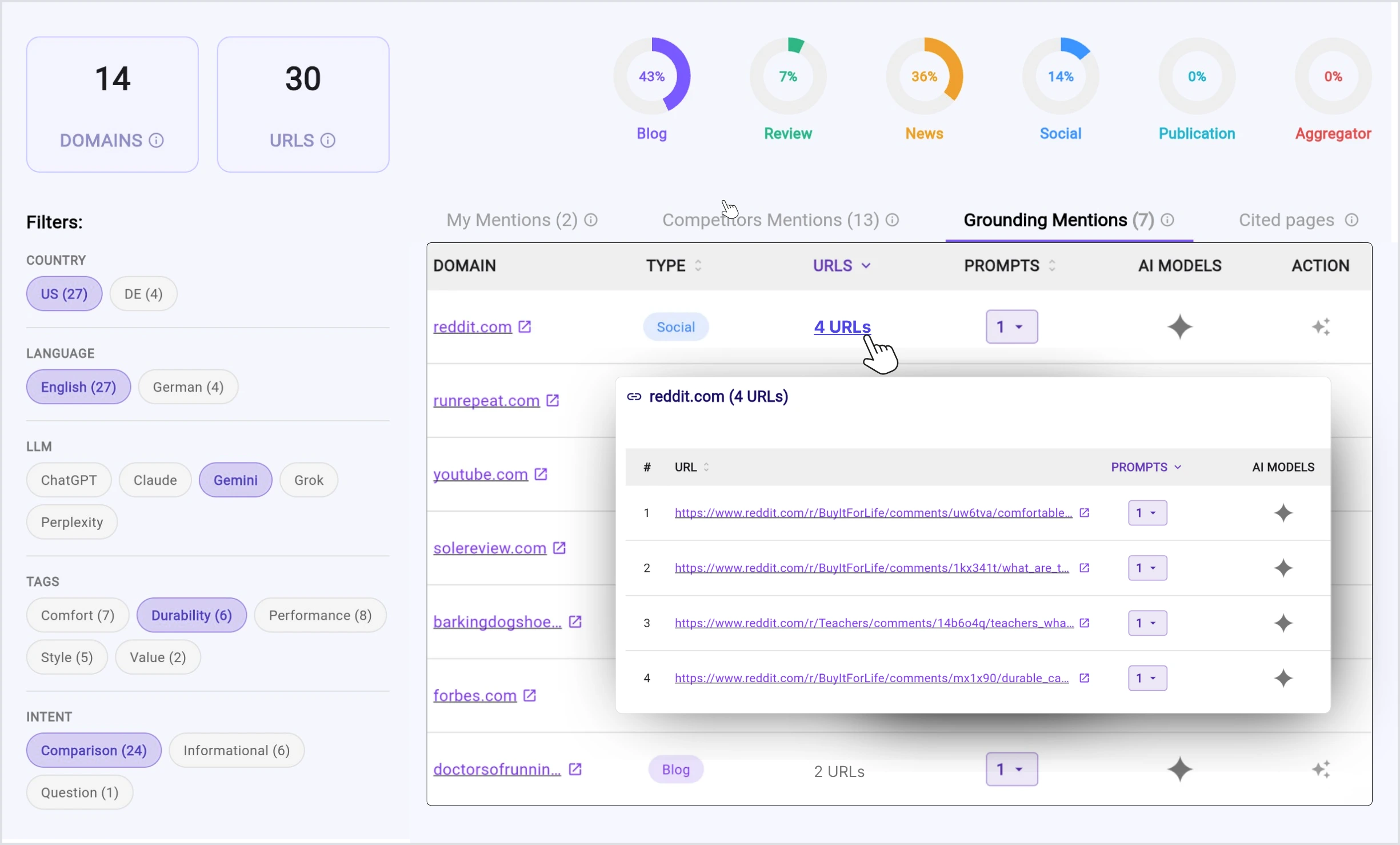
See the total number of unique domains and URLs cited across your tracked prompts.
Chatoptic also groups sources by type, including:
This shows which types of sources AI models rely on most when answering questions about your category.
Filter the report by AI model, prompt tag, or search intent.
Use tags to focus on a specific product, service, market, or topic. Intent filters help separate comparison prompts, questions, recommendations, and other tracked journeys.
This lets you analyze a focused part of your citation landscape instead of treating every source as equally relevant.
Open My Mentions to find the domains and URLs connected to your brand or website in AI answers.
For each source, you can review:
Open a domain to see the exact pages behind its results and which prompts led AI models to cite them.
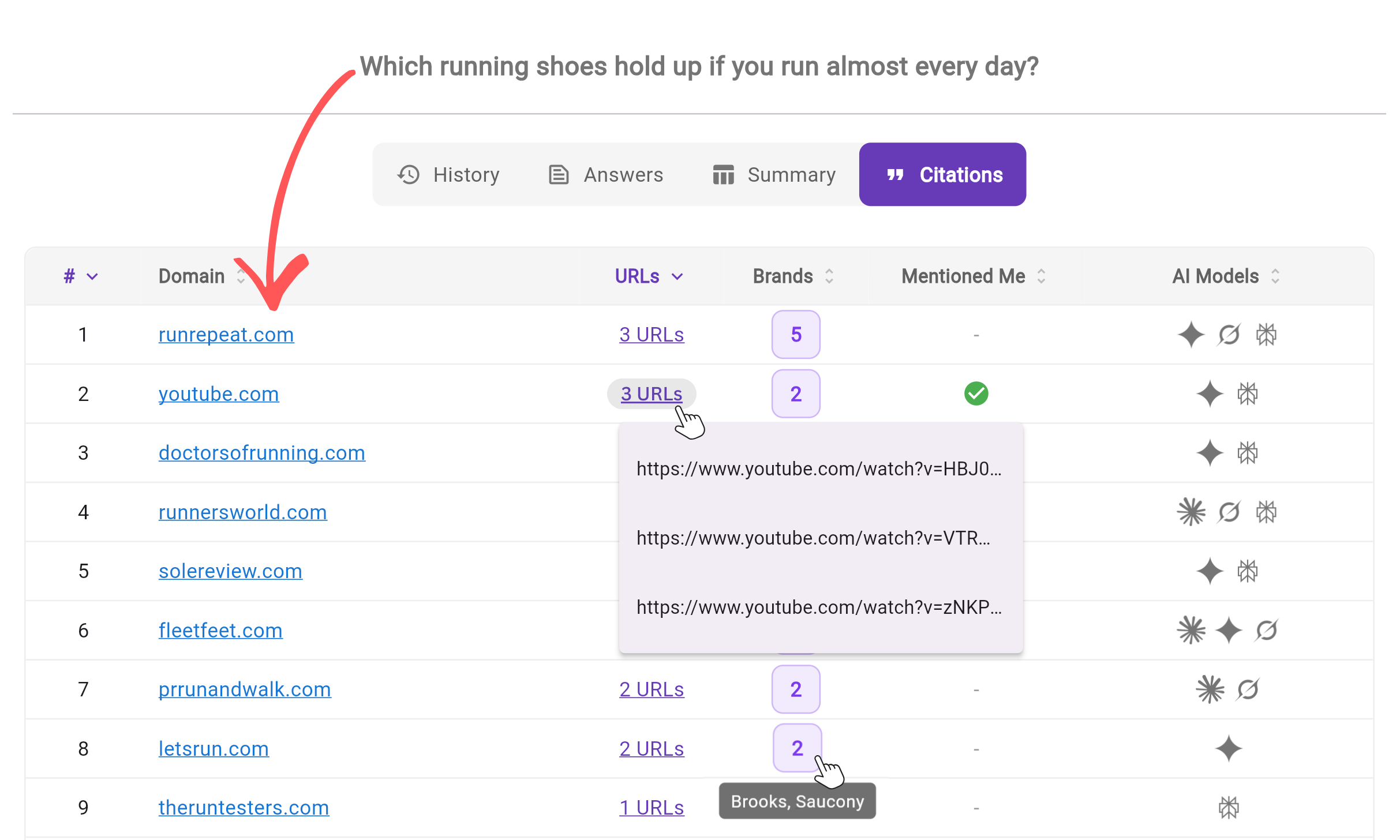
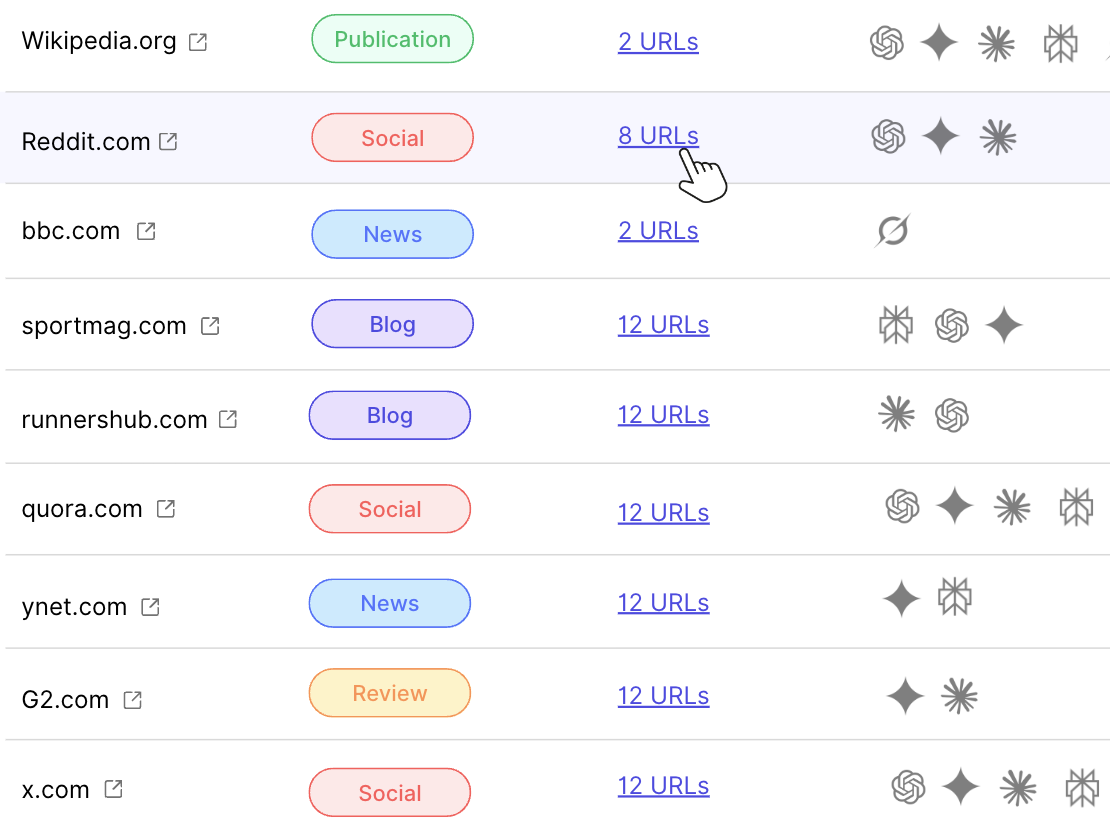
Competitors Mentions shows the domains cited when competing brands appeared. See how many URLs, prompts, brands, and AI models are connected to each source.
Continue to Competitor AI Visibility Analysis to compare where each competitor wins across prompts, personas, and models.
Grounding Mentions shows sources used to support statements within the answer, even when they are not directly connected to a brand mention. These sources help reveal where AI models get the information they use to explain your category.
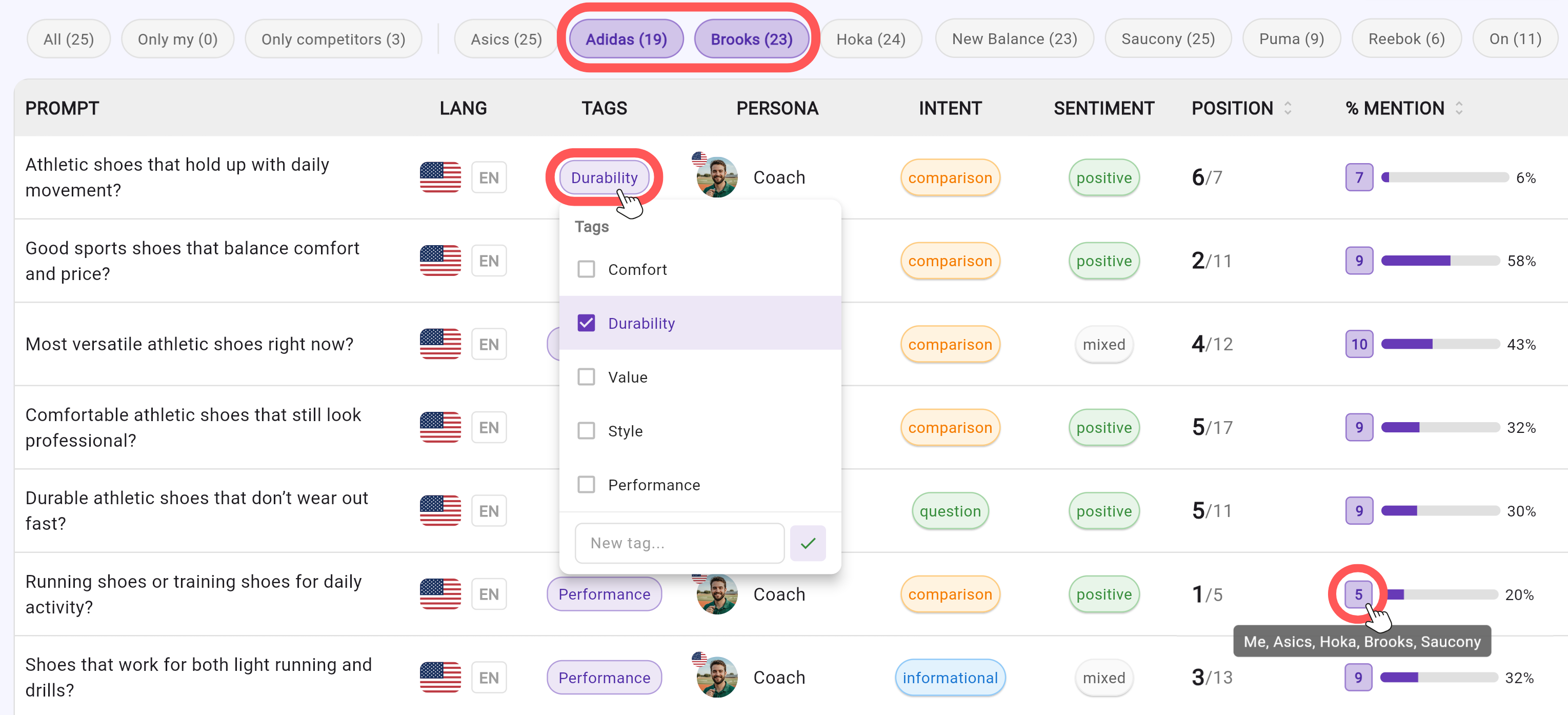
Open Cited Pages to see every page from your website or a competitor’s website that AI models cited.
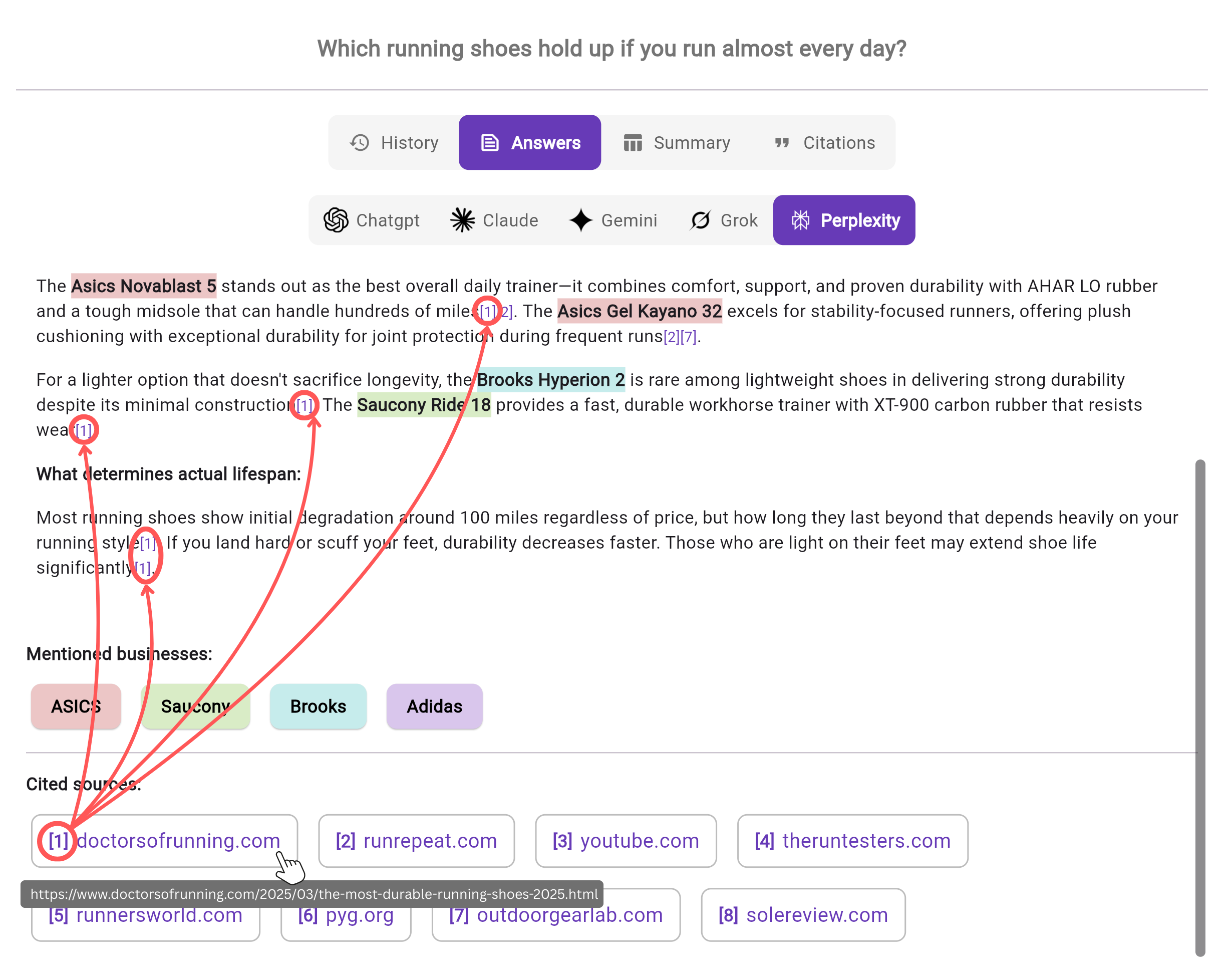
Compare pages by total citations and model coverage to understand which content earns the most visibility. You can also open individual results to connect citations with the prompts and paragraphs where they contributed.
Unlike answer-level citation lists, paragraph-level analysis shows which source supports each specific part of the response.

A mention means a brand appears in the generated answer. A citation means the AI model links to or references a source.
A brand can be mentioned without its website being cited, and a website can be cited to support information without the brand being recommended.
No. A citation shows that a source contributed to the answer, but it does not always mean the model recommended the brand.
Reviewing the answer, brand mention, sentiment, and paragraph-level context helps explain what role the citation played.
My Mentions shows the domains and URLs connected to your brand or website in tracked AI answers.
You can see the source type, related prompts, sentiment, individual URLs, and the AI models that used each source.
Competitors Mentions shows sources cited in answers where tracked competitors appeared.
It helps you find the domains and pages connected to competitor visibility, including how many prompts, brands, URLs, and AI models are associated with each source.
Grounding Mentions are sources used by AI models to support statements within an answer.
They may provide facts, explanations, definitions, or other context without directly mentioning your brand or a competitor.
Yes. Cited Pages lists the individual pages from your website and tracked competitor websites that AI models cited.
You can compare their total citations and see which AI models referenced each page.
Paragraph-level citation analysis connects each source to the specific paragraph it supports.
This gives you a clearer view than attaching all citations to the full answer, especially when different parts of the answer rely on different sources.
Yes. You can filter results by prompt tags and search intent to focus on a particular topic, product, market, or stage of the customer journey.
You can also filter by AI model to see how citation behavior changes across platforms.
Yes. Chatoptic classifies cited sources as blogs, reviews, news, social platforms, publications, or aggregators.
The source distribution shows which content types make up the citation landscape for your tracked prompts.
Yes. AI models may select different information and sources based on the needs, background, priorities, and preferences included in the persona context.
Chatoptic runs prompts with that audience context, helping you see which citations are more likely to shape the answers received by different types of customers.
Discover how your brand is perceived in AI.